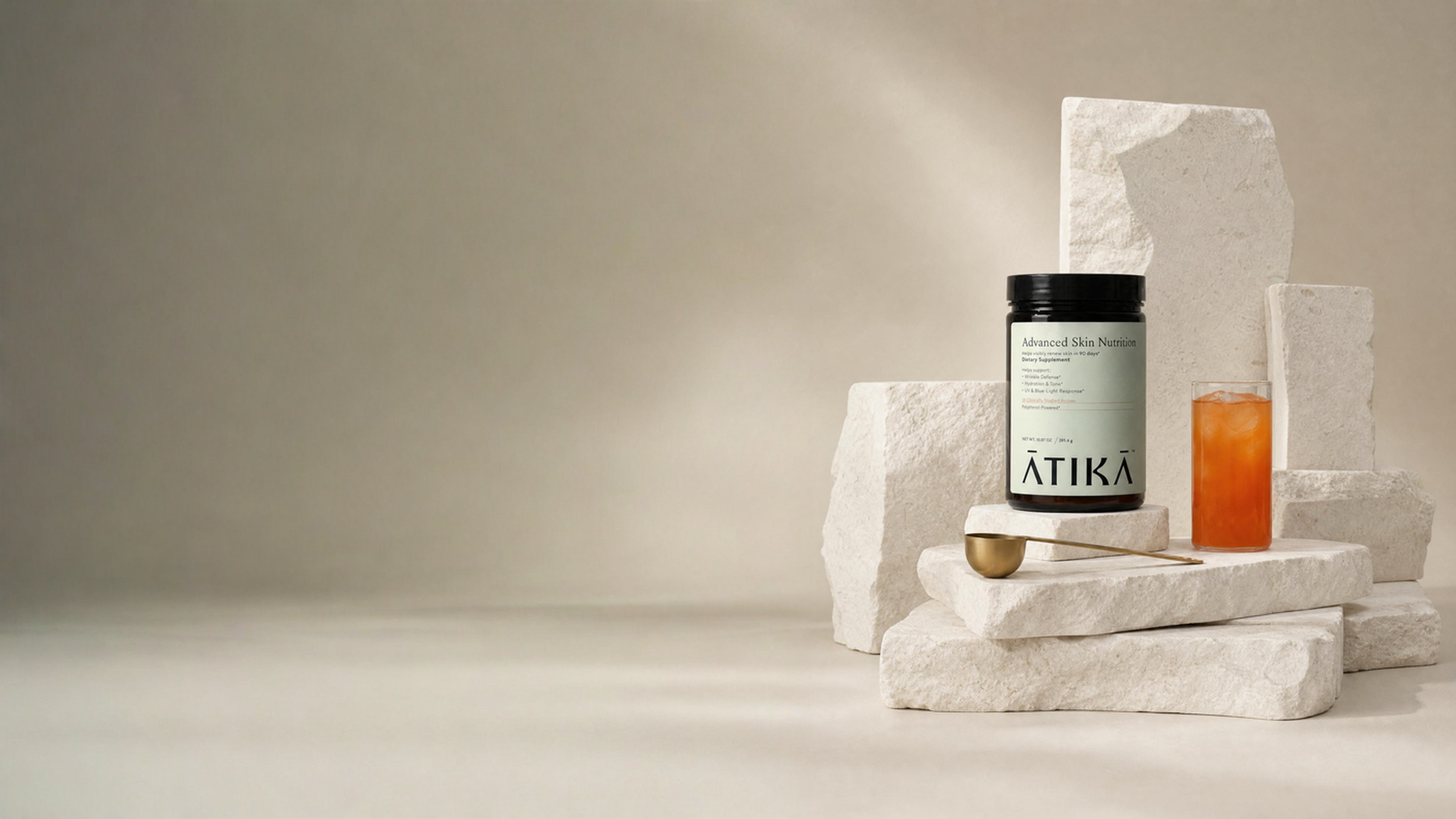
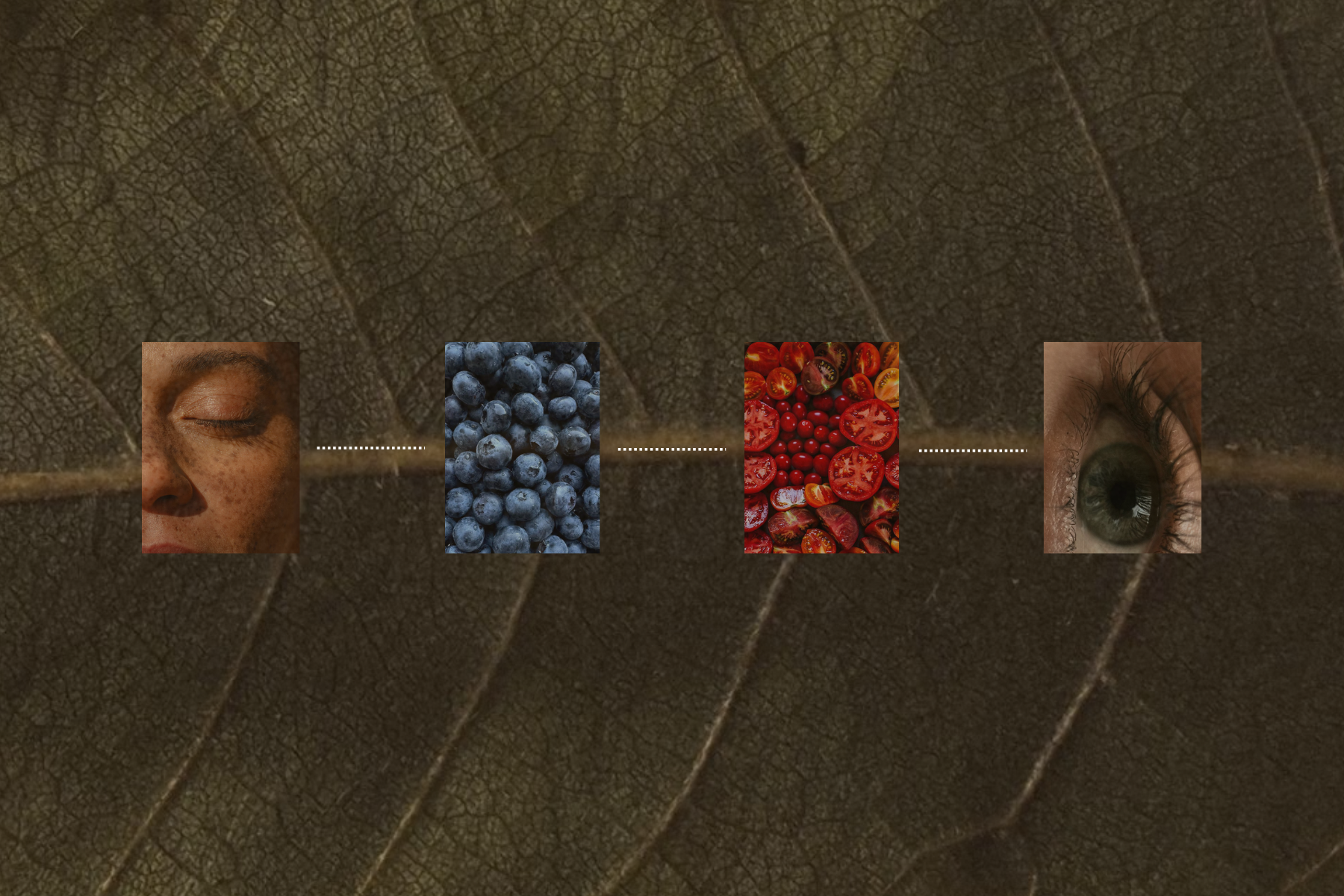
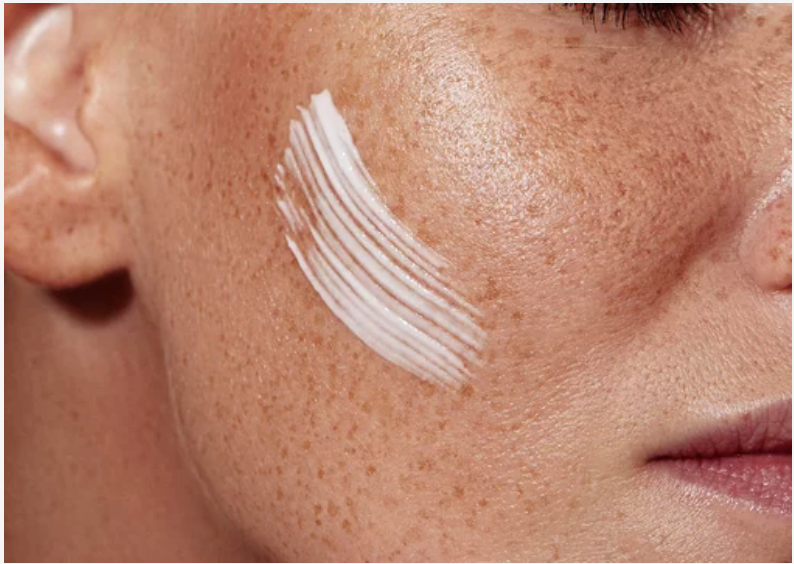
When appetite and intake drop, the body prioritizes vital organs first. Skin and hair are often the first to lose out, leaving structure, hydration, and growth cycles under-supported. ATIKA is one daily foundation: collagen peptides, ceramides, antioxidants, and NAD+ precursor in one daily scoop.
Peri/menopause
WHEN HORMONES CHANGE, YOUR SKIN’S NEEDS CHANGE TOO.
Declining estrogen can affect collagen, ceramides, hydration, and antioxidant defenses — showing up as dryness, dullness, and less resilient skin. ATIKA gives your skin a daily internal foundation alongside the topical care you already use.
Hair support
SHEDDING IS A SIGNAL. SUPPORT THE RECOVERY PHASE.
Ceramosides™ was shown in clinical trials to reduce hair loss and increase hair length, with improved resistance to breakage. VERISOL® was shown to increase hair thickness. AstaReal® astaxanthin and a broad-spectrum antioxidant network help protect hair follicle cells from the oxidative damage linked to hair loss.
ATHLETE SUPPORT
YOU TRAIN HARD. YOUR SKIN FEELS IT.
Exercise generates oxidative stress that damages collagen and depletes the skin's antioxidant reserves. Sweat, friction, salt, chlorine, and frequent post-training cleansing wear down the barrier lipids that keep water in, leading to dehydration and irritation. ATIKA replenishes antioxidant reserves and supports the barrier lipids athletes deplete daily.
SUN + OUTDOOR LIFE
YOU CAN LOVE THE SUN AND TAKE SKIN LONGEVITY SERIOUSLY.
UV exposure generates oxidative stress that can affect collagen, pigmentation, and the skin’s barrier long before visible damage appears. Sunscreen is essential; ATIKA adds daily internal antioxidant and skin-barrier support for the hours you spend outside.
FULL TRANSPARENCY
You're as obsessed with dosing, purity and sourcing as we are.
No proprietary blends or decorative “fairy-dust” doses. Every ingredient evidence-based. Every dose clinically relevant. Formulated by a PharmD who wouldn't put her name on anything less.
Every other skin supplement is built around a benefit — hydration, firmness, glow. I built ATIKA around the biology underneath all of them: four systems that actually drive how skin ages, formulated together.
Lily Shapiro, PharmDFounder, ATIKA
The CALM Framework
Four biological systems determine how skin ages.
C
Collagen Integrity
Supports firmness, elasticity, and visible structure.
A
Antioxidant Balance
Helps defend against oxidative stress from daily life, pollution, and UV exposure.
Use ATIKA consistently for 12 weeks. If you do not notice a meaningful improvement in the look or feel of your skin, you may request a refund. Full terms apply.
If your order includes a subscription, it will automatically renew at the price and frequency shown until canceled, and you authorize ATIKA to charge your payment method for each renewal. Cancel future renewals online at any time; cancel at least 24 hours before the scheduled billing date to prevent the next charge. By clicking “Pay now,” you expressly consent to these recurring charges and agree to ATIKA’s Terms of Service, Subscription & Cancellation Policy, and Refund & Replacement Policy.
International shipping rates are calculated at checkout based on destination and order weight. Orders of 6 jars or more qualify for complimentary international shipping. International orders may be subject to customs duties, taxes, or import fees determined by the destination country. These charges are the responsibility of the customer and are not included in the purchase price. Customs policies vary widely by country, and we cannot predict or control these charges.
Antioxidants can reduce hyaluronic acid breakdown in laboratory experiments. But does that mean a supplement can make facial filler last longer? A pharmacist explains the evidence and the missing c...
Do skin supplements work? A PharmD explains what human studies show for hydration, elasticity, barrier support, and aging skin — plus realistic timelines and how to choose.
Collagen can support skin structure, elasticity, and wrinkle appearance — but skin aging involves more than collagen alone. A pharmacist explains how barrier lipids, antioxidants, carotenoids, and ...
Perimenopause can coincide with dryness, sensitivity, reduced elasticity, and changes in skin texture or firmness. This evidence-based guide explains what estrogen is known to affect, where the res...
Summer sun is beautiful and dangerous. Most people rely entirely on topical sunscreen — which is necessary but incomplete. UV damage operates on two fronts: oxidative stress inside cells and barrie...
Substantial weight loss on semaglutide, tirzepatide and other GLP-1-based therapies can make facial hollowing, loose skin and dryness more visible. The clearest established cause is loss of facial ...
What are the best supplements for skin? We examine collagen peptides, oral ceramides, carotenoids, polyphenols, vitamins and minerals — and what human research actually shows for skin structure, hy...
What supplements actually help hydrate dry skin? We examine the human evidence for oral ceramides, collagen and other nutrients that support skin hydration and barrier function.
Dermatologists are moving beyond prescribing topicals. A growing number recommend internal nutritional support as foundational strategy — not as replacement for sunscreen or medical treatment, but ...
What supplements actually support skin elasticity? We examine the human evidence for collagen peptides, ceramides, antioxidants and other nutrients that support skin structure, hydration and resili...
Can supplements help crepey, sagging or loose skin? We examine the evidence for collagen peptides, ceramides and antioxidants, and what supplements can realistically do.
UV light damages skin through five biological systems — collagen, barrier, oxidative defense, cellular energy, and DNA. Here's what's actually happening, and why protection has to work from the ins...
Hair shedding and skin changes often appear during the same periods of stress, illness, rapid weight loss, childbirth, or hormonal change. This evidence-based guide explains where nutrition may hel...
Cellular energy sets the ceiling for skin repair, turnover, and barrier recovery. When it’s constrained, even well-chosen inputs underperform. NAD+ sits at the center of this system.
Most dry skin isn't a moisture problem — it's a barrier lipid problem. A PharmD explains how oral ceramides work from the inside out, and what the research actually shows.
Senescent (“zombie”) cells are damaged cells that stop dividing but don’t fully shut down. In skin, they can release inflammatory signals that contribute to collagen breakdown, barrier disruption, ...
A detailed, research-based explanation of how skin aging begins at the cellular level: fibroblast changes, collagen loss, ceramide decline, and oxidative stress. Includes clinical references and a ...
Antioxidants don’t work alone. They function as a network inside biological systems that manage oxidative stress, signaling, and repair. When one antioxidant is megadosed in isolation, the system c...
In-office procedures create controlled injury so skin can repair. But results depend on biology: collagen turnover, barrier lipids, oxidative defense, and recovery inputs. This article explains wha...
Skin longevity is the long-term biological health of the skin. This article defines the category and explains how collagen structure, barrier lipids, antioxidant defense, and cellular energy intera...
Dosing is what makes an ingredient biologically relevant. This article explains why a “small amount” can be real but still ineffective — like a sip of water that doesn’t hydrate. Learn how dose, du...
GLP-1 medications can lead to rapid weight loss, which may affect facial volume, skin structure, and hair cycling. This article explains what “Ozempic face” really means, why these changes occur, a...
Specific oral collagen peptides — most consistently VERISOL® — have been studied in randomized controlled trials. At 2.5 g/day for 8–12 weeks, studies report modest but meaningful improvements in w...
A clinical overview of how collagen structure changes across decades -- from the 20s through the 50s+ -- and how UV exposure, hormones, oxidative stress, and foundational skin nutrition influence l...
Antioxidant supplements reach deeper skin layers through circulation and influence UV-induced redness, oxidative markers, tone, and hydration. This article reviews what controlled human studies act...
Glutathione is key inside cells, but supplements rarely reach the skin intact. Learn what actually supports antioxidant balance, collagen, and long-term skin health.
The FDA’s December 2025 proposal to allow bemotrizinol in U.S. sunscreens could expand consumer access to a widely used global UV filter. This guide explains what bemotrizinol is, how it compares t...
Skin is not a single surface but a layered biological system. This functional guide explains how the epidermis, dermal–epidermal junction, dermis, and deeper support tissues change over time — and ...
A clinical explanation of how estrogen, cortisol, thyroid hormones, and androgens influence collagen, dermal thickness, and skin structure—and where foundational skin nutrition fits.
Collagen & Skin Structure: The Complete Guide explains what collagen is, how it changes with age, and what human studies show about defined collagen peptides. This article maps collagen’s role ...
A clear, evidence-based breakdown of common collagen myths and what studies actually show about dose, timelines, internal vs topical support, cofactors, and foundational skin nutrition.
A clinical explanation of how glycation and advanced glycation end products (AGEs) stiffen dermal collagen, interact with UV and hormones, and where foundational skin nutrition fits within long-ter...
A clinical comparison of internal collagen peptides and topical skincare, showing how each influences collagen biology through different pathways and how they work together within foundational skin...
A clinical explanation of how collagen changes across perimenopause and menopause, how estrogen decline affects dermal structure, and where foundational skin nutrition supports skin longevity.
A clinical comparison of collagen peptides, gelatin, and whole collagen — how they differ in structure, absorption, and evidence, and what actually matters for skin.
A clear, evidence-based guide to the collagen types found in human skin—especially type I and type III—what they do, how they change with age, and how foundational skin nutrition supports the derma...
A clinical review of how long collagen supplements take to work, including VERISOL® timelines for elasticity, hydration, wrinkle appearance, and dermal collagen density.
A clinical explanation of how low-molecular-weight collagen peptides are absorbed, how VERISOL® supports dermal collagen in human trials, and why ATIKA uses a 2.5 g dose.
Collagen breakdown is driven by UV exposure, oxidative stress, hormonal changes, glycation, and lifestyle factors such as smoking, sleep, pollution, and diet. This article explains the biological m...
A clear, evidence-based explanation of what collagen is, where it sits in the skin, how its structure changes with age and UV exposure, and why type I and III collagen matter most for visible firmn...
At a Glance
Skin health is shaped by four interacting layers: structure (collagen and elastin), lipids (barrier), antioxidant systems, and micronutrient cofactors.
Each layer depends on specifi...
Skin supplements don’t work instantly, and they don’t all follow the same timeline. This guide explains how long collagen, antioxidants, ceramides, and other skin supplements typically take to work.
A simple guide to how oxidative stress forms in skin, how your internal antioxidant network works, and how factors like pollution, light, and daily habits shape long-term skin longevity. This page ...
Oxidative stress begins damaging collagen and barrier lipids long before visible aging appears. This article explains how internal antioxidant systems complement topical care to support deeper skin...
Pollution and sunlight create free radicals that add to daily oxidative stress in the skin. This article explains how oxidative stress affects collagen, barrier lipids, and cellular energy — and ho...
Blue light from screens isn’t as strong as UV, but research shows it can contribute to oxidative stress, pigmentation changes, and texture shifts over time. This article explains what HEV light act...
Polyphenols support how the skin responds to light, redness, and everyday oxidative stress. Human studies of green-tea catechins, grape-seed OPCs, citrus polyphenols, and maqui anthocyanins show ch...
A technical comparison of oral and topical vitamin C — how each reaches the skin, the layers they influence, the mechanisms they support, and the limitations of both routes. Explains why combining ...
Selected episodes where Lily Shapiro, PharmD, explains skin longevity, the CALM framework, and how internal nutrition complements topicals and procedures.
Building ATIKA & the Science of Aging Well with Lily Shapiro, PharmD
From Wall Street to Skin Longevity
In this episode of Fieldswell, Lauren Fields sits down with Lily Shapiro, PharmD, the founder of Attica Wellness, for an inspiring and candid conversation about reinvention, skin health, and entrepreneurship. From her beginnings as an immigrant and pharmacist to a high-powered finance career on Wall Street and ultimately launching a groundbreaking skin longevity supplement, Lily Shapiro shares how each pivot in her life built the foundation for her latest venture. Together, they dive deep into the science of skin, the challenge of decoding supplement labels, and what it really means to create a product with purpose and integrity. If you’re curious about the systems approach to beauty, why less is sometimes more, and how to courageously pursue your passion—this episode is for you.
The Truth About Supplement Dosing & Building a Skin-Longevity Brand From Her Frustration
The Pharmacist Who Carried a Bowl of 20 Pills to Work Every Day
Lily Shapiro spent over a decade on Wall Street before her own 40s skin-health scramble turned into a business. She was pharmacist-trained, so when she couldn't find real answers on dosing and formulation, she went and found them herself — 300+ clinical trials deep. She's breaking down what actually works in skin longevity, why most supplements are dosed too low to do anything, and how she built ATIKA to fix it. This one is worth your time.
Skin Aging: The Science Behind Skin Longevity with Dr. Lily Shapiro of ATIKA | Ep. 49 | 6 May 2026
Well Done with Kat Vong
Are you taking collagen, layering on hyaluronic acid, and investing in skincare — but still wondering what actually supports long-term skin health? In this episode, Lily Shapiro, PharmD, founder of ATIKA, a science-backed nutritional skin supplement, talks about skin longevity, beauty supplements, and what it really means to support your skin from the inside out. We get into the truth about collagen supplements, the skin barrier, how oxidative stress impacts aging, and what consumers should look for before trusting any supplement label.
How to Actually Slow Skin Aging | Ep. 156 | 20 April 2026
The Galina Rivina Podcastina
Why a 10-step routine may be doing more harm than good, which popular supplements have no scientific backing, and what is actually driving skin to age faster than it should. Covers the CALM framework, how to evaluate collagen, the difference between structural and cosmetic hydration, and the case for internal nutrition as the rate-limiting factor in midlife skin health.
"You can drink all the water you want, but if it evaporates from your skin faster than you replenish it, you'll have dry skin."
The Science of Skin Aging: What Actually Works (and What Doesn’t) With Lily Shapiro, PharmD | Ep. 133 | 18 March 2026
One Thing with Dr. Adam Rinde
A science-backed deep dive into skin longevity. Lily Shapiro, PharmD (founder of ATIKA), reframes skincare from chasing surface “anti-aging” fixes to optimizing your lifelong “skinspan.” She unpacks how skin actually ages beneath the surface, why popular solutions like collagen, biotin, and many topicals often miss the mark, and outline four core drivers of long-term skin health: collagen integrity, antioxidant balance, lipid barrier function, and mitochondrial health.
Collagen Doesn’t Fix Skin Aging (Here’s What Actually Does) | Ep. 36 | 23 January 2026
HYDRATE with Tracy Duhs
Conversation focused on skin as a functional organ, hydration biology, oxidative and UV stress, and why skin longevity requires systemic, clinically dosed nutrition rather than topical or cosmetic fixes.
an ingestible approach to skin health and longevity | 4 May 2026
Ellika Dattilo
Dr. Lily Shapiro is quietly redefining how we think about skin aging — not from the outside in, but from a cellular, internal perspective. She spoke about diving deep into clinical research to understand what actually drives skin longevity, beyond trends and surface-level solutions. What emerged from that work is something quite different: an ingestible approach to skin health, built on high-quality, bioavailable ingredients. Dr Lily and myself spoke about what truly supports the skin from a holistic perspective — what works, what doesn’t, and why most approaches miss the mark.
How to Repair Your Skin Barrier + Hydration That Works | 6 February 2026
Another Million Miles Podcast
On Another Million Miles podcast, we discuss why skin barrier lipids are the foundation of real hydration, not just humectants like hyaluronic acid. We also cover how ceramides support structure at the cellular level, why mitochondrial health influences collagen production, and how to think critically about supplement ingredients and dosing.
Skin Longevity, Not Just Skincare | 24 April 2026
SuperSelf
Pete Ferrari sits down with Lily Shapiro, PharmD, former Wall Street executive, and founder of ATIKA, to explore the emerging concept of skin longevity and why true skin health starts from the inside out. Lily turned her clinical training and analytical background toward a deeper question: what actually drives skin aging? What she discovered led her to create a new category of wellness built not around quick cosmetic fixes, but around supporting the biological systems that help skin stay strong, hydrated, and functional over time.
The Future of Skin Longevity: A Smarter, Health-First Approach with Lily Shapiro, PharmD | 23 January 2026
Experience Health with Rachael Vassar
Discussion on how stress physiology, inflammation, and recovery capacity influence skin aging, and why foundational, evidence-based nutrition is essential for long-term skin function and stability.
Skin Longevity for Men: The Science Behind Healthy Aging and Smarter Skincare
Mind Over Masculinity
Episode exploring why men are rethinking skin health — covering collagen misconceptions, antioxidant systems, and how internal nutrition, lifestyle, and the hidden drivers of skin aging work together to keep skin resilient over time.