

Internal vs Topical Collagen Support: What Each Can and Cannot Do
Internal collagen support and topical collagen-related interventions act on overlapping biology through different routes. Internal approaches deliver collagen peptides and cofactors via circulation to fibroblasts and deeper structures, supporting dermal matrix maintenance over time.1–5 Topical approaches reach the epidermis and superficial dermis, using retinoids, antioxidants, and barrier-focused formulas to influence turnover, UV defense, and surface texture.2,6 Internal and topical collagen support play different roles within a comprehensive skin longevity framework.
This article focuses specifically on internal vs topical collagen support — how they differ, where they intersect, and how they fit within foundational skin nutrition, nutritional dermatology, and long-term skin longevity. For a broader inside–outside view, see How Internal Skin Nutrition and Topicals Work Together.
In This Article You Will Learn
- How internal collagen support (peptides + cofactors) reaches the dermis.
- How topical interventions influence collagen-related pathways at the surface.
- What internal support can and cannot replace in a topical routine.
- How to think about combining inside and outside inputs over decades.
- Where Advanced Skin Nutrition and topical care fit within a unified collagen strategy.
Table of Contents
- 1. What Do We Mean by Internal vs Topical Collagen Support?
- 2. How Internal Collagen Support Reaches the Dermis
- 3. How Topical Products Influence Collagen-Related Pathways
- 4. Internal vs Topical: Strengths, Limits, and Complementarity
- 5. How This Plays Out Across Decades
- 6. Where Advanced Skin Nutrition Fits Alongside Topical Care
- Key Takeaways
1. What Do We Mean by Internal vs Topical Collagen Support?
In ATIKA’s collagen cluster, “collagen support” refers to strategies that help maintain the dermal collagen matrix described in Collagen & Skin Structure: The Complete Guide and What Is Collagen?
- Internal collagen support includes defined collagen peptides, vitamin C, amino acids, trace minerals, and related nutrients delivered orally, reaching the dermis via circulation.
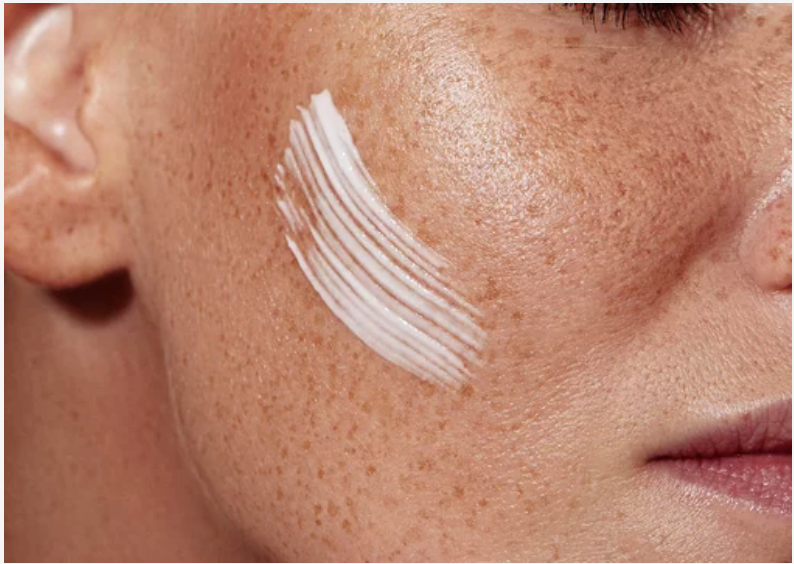
- Topical collagen-related support includes sunscreen, retinoids, topical antioxidants, barrier-supportive moisturizers, and peptide-containing formulas applied to the skin surface.
Both routes can influence collagen biology, but in different compartments and on different timescales.
2. How Internal Collagen Support Reaches the Dermis
Collagen peptides and bioavailability
Hydrolyzed collagen peptides are broken down into low–molecular-weight fragments (often 2–5 kDa) that are absorbed through the intestine. Hydroxyproline-containing dipeptides have been detected in plasma after ingestion, confirming systemic availability.3 These mechanisms are explained in detail in How Collagen Peptides Work.
What human trials show for skin
Defined collagen peptide compositions – such as the Verisol® complex used in many trials – have been evaluated in randomized, placebo-controlled studies. At 2.5 g/day for 8–12 weeks, participants showed improvements in:
- elasticity,1,4
- winkle appearance,1
- hydration,5
- and dermal collagen density.5
These outcomes are summarized in Does Collagen Actually Work? What Human Studies Show and How Long Do Collagen Supplements Take to Work?
Learn more — collagen science: Read the ATIKA Clinical White Paper for the clinical rationale, nutrient cofactors, and human trial evidence that support our collagen recommendations. Read the White Paper.
Cofactors: why they matter regardless of source
Collagen synthesis depends on vitamin C, selected amino acids (including proline and lysine), copper, zinc, and other micronutrients as enzymatic cofactors. Without these inputs, fibroblasts cannot efficiently build or stabilize new collagen fibrils.4,5 No matter which collagen source someone chooses – bovine, marine, or a defined peptide composition – the biology is the same: collagen works best when cofactors are available. For a detailed review, see Collagen Cofactors: The Nutrients That Make Collagen Supplements Work Better.
For a comparison of how different collagen sources and peptide compositions vary in evidence, see Marine vs Bovine Collagen: What the Science Actually Says.
3. How Topical Products Influence Collagen-Related Pathways
Sunscreen and photoprotection
UV exposure is a major driver of collagen breakdown. It increases reactive oxygen species (ROS) and activates matrix metalloproteinases (MMPs) that fragment collagen and elastin.2 Daily broad-spectrum sunscreen is the primary way to reduce this input. Internal support cannot replace topical UV filters.
Retinoids and cell turnover
Topical retinoids modulate gene expression related to epidermal differentiation and dermal matrix remodeling. They improve the appearance of fine lines and texture by increasing epidermal turnover and influencing collagen-related pathways in the upper dermis.6
Topical antioxidants and barrier support
Topical vitamin C, E, and other antioxidants help neutralize ROS at the surface where UV and pollution first interact with the skin. Barrier-focused moisturizers rich in ceramides support comfort and water balance, which in turn influences how the dermal matrix tolerates daily stress. These topics are covered in Ceramides vs Hyaluronic Acid and Oxidative Stress, Skin, and Internal Antioxidant Support.
Topical collagen itself
Whole collagen molecules are too large to penetrate the skin barrier meaningfully. Topical products that list “collagen” primarily act as moisturizing or film-forming agents rather than delivering collagen into the dermis. Their role is distinct from internal collagen peptides, which work via digestion and circulation.
The internal vs topical distinction applies to antioxidants as well: internal antioxidants act on dermal biochemistry while topicals protect the surface. See the direct comparison in Internal vs Topical Antioxidants for Skin: What Each Can and Can’t Do and guidance on how to pair modalities in How Do Internal Skin Nutrition and Topicals Work Together?
4. Internal vs Topical: Strengths, Limits, and Complementarity
| Dimension | Internal Collagen Support | Topical Support |
|---|---|---|
| Main route | Circulation → dermis & systemic | Surface → epidermis & upper dermis |
| Primary focus | Matrix support, elasticity, deeper structure | Texture, tone, photoprotection, local remodeling |
| Evidence type | RCTs for defined peptides at specific doses1,4,5 | Decades of clinical data for retinoids, sunscreen, antioxidants2,6 |
| Limitations | Cannot replace sunscreen or topical actives; effects are gradual. | Limited reach to deeper dermis; does not provide systemic support. |
| Best use | As part of a foundational skin nutrition routine. | Alongside internal support and photoprotection for comprehensive care. |
5. How This Plays Out Across Decades
Collagen changes gradually across life. In the 20s, intrinsic aging and UV exposure begin to shape future collagen status; in the 30s and 40s, early fine lines and midface changes appear; in the 50s+, hormonal shifts and accumulated damage become more prominent.2,11,12
Collagen Decline by Decade and Collagen & Menopause describe these trends in detail. Internal and topical strategies can be layered differently at each stage:
- 20s: focus on sunscreen, barrier-aware skincare, and basic foundational nutrition.
- 30s: add internal collagen peptides and retinoids where appropriate.
- 40s–50s+: refine internal support (peptides, cofactors, antioxidants) and topical regimens in the context of hormonal changes.
Specific choices should always respect individual skin history, tolerances, and clinical guidance.
6. Where Advanced Skin Nutrition Fits Alongside Topical Care
From the perspective of nutritional dermatology, Advanced Skin Nutrition was formulated as a foundational system that complements topical care. It contains a defined collagen peptide composition (Verisol®) at the 2.5 g dose used in clinical trials,1,4,5 along with Ceramosides™ phytoceramides, carotenoids, polyphenols, vitamins, minerals, and cofactors targeting collagen structure, barrier lipids, the antioxidant network, the gut–skin axis, and cellular energy.
Ingredient-level details are available in the ATIKA Ingredient Glossary and on the ATIKA Advanced Skin Nutrition Ingredients page.
No matter which collagen source someone chooses – bovine, marine, or a defined collagen peptide composition – the underlying biology is the same: collagen synthesis requires vitamin C, selected amino acids, and trace minerals as enzymatic cofactors. Without these inputs, fibroblasts cannot efficiently build or stabilize new collagen fibrils. For a detailed review of these pathways, see Collagen Cofactors: The Nutrients That Make Collagen Supplements Work Better.
In practice, internal collagen support is most effective when layered with sunscreen, barrier-first skincare, and carefully chosen actives such as retinoids and topical antioxidants — an inside–outside approach that aligns with foundational skin nutrition and long-term skin longevity.
Key Takeaways
- Internal collagen support reaches the dermis via circulation and has RCT evidence for elasticity, wrinkle appearance, hydration, and dermal density with defined peptides.1,4,5
- Topical strategies act mainly on the epidermis and upper dermis, with strong evidence for sunscreen and retinoids in managing photoaging.2,6
- Collagen synthesis depends on cofactors such as vitamin C and key minerals, regardless of collagen source.4,5
- Internal and topical collagen-related support are not interchangeable; they are complementary routes acting on shared biology from different directions.
- Framing collagen care within foundational skin nutrition and skin longevity helps align daily routines with how skin actually ages over decades.
Notes
- This article is for informational purposes only and is not intended to diagnose, treat, cure, or prevent any disease.
- Evidence summarized here is based on population-level data; individual responses vary.
- Nutrition and supplements complement—but do not replace—broad-spectrum sunscreen, topical skincare, or in-office procedures.
- Discuss any new supplement or topical regimen with your clinician, especially if you are pregnant, nursing, have a medical condition, or take prescription medications.

Written by Lily Shapiro, PharmD
Lily Shapiro is a Doctor of Pharmacy and the founder of ATIKA, a clinically grounded ingestible skin-health brand focused on skin longevity. She formulated Advanced Skin Nutrition as a foundational, all-in-one daily powder that combines collagen peptides, Ceramosides® phytoceramides, targeted antioxidants, carotenoids, polyphenols, vitamins, minerals, and cofactors at evidence-based oral doses. Her work centers on translating peer-reviewed research in nutritional dermatology and healthy aging into simple, transparent formulations that support long-term skin structure, barrier function, and the skin's defenses against everyday oxidative stress.

Leave a comment
This site is protected by hCaptcha and the hCaptcha Privacy Policy and Terms of Service apply.